selected work / independent digital experience
the artist's way companion
a digital home for a 12-week creative practice. i designed and built it to make returning to the work feel easier, including on the days i missed.
- my role
- independent maker. product direction, copy, visual design, and development with AI assistance.
- timeline
- built in august 2026; released publicly in september 2026.
- the experience
- morning pages, weekly artist dates, and a grace ledger, in an interface inspired by an old desktop.
- built with
- React, TypeScript, Vite, and Tailwind. writing stays in the browser, with backup and restore.
the brief i gave myself
i had started julia cameron’s the artist’s way more than once. this time, coming back to creative work after burnout, i wanted a digital space that fit how i would use it.
the challenge was keeping a daily practice approachable when i missed a day. a broken streak was likely to make me avoid coming back. my writing also needed to stay private, and reminders needed to fit into the calendar i already used.
i built for those needs first. this started as a tool for me, with my own use shaping the decisions.
make room for a missed day
i almost built streaks in. i had the counter sketched out before i stopped to ask what losing that number would feel like.
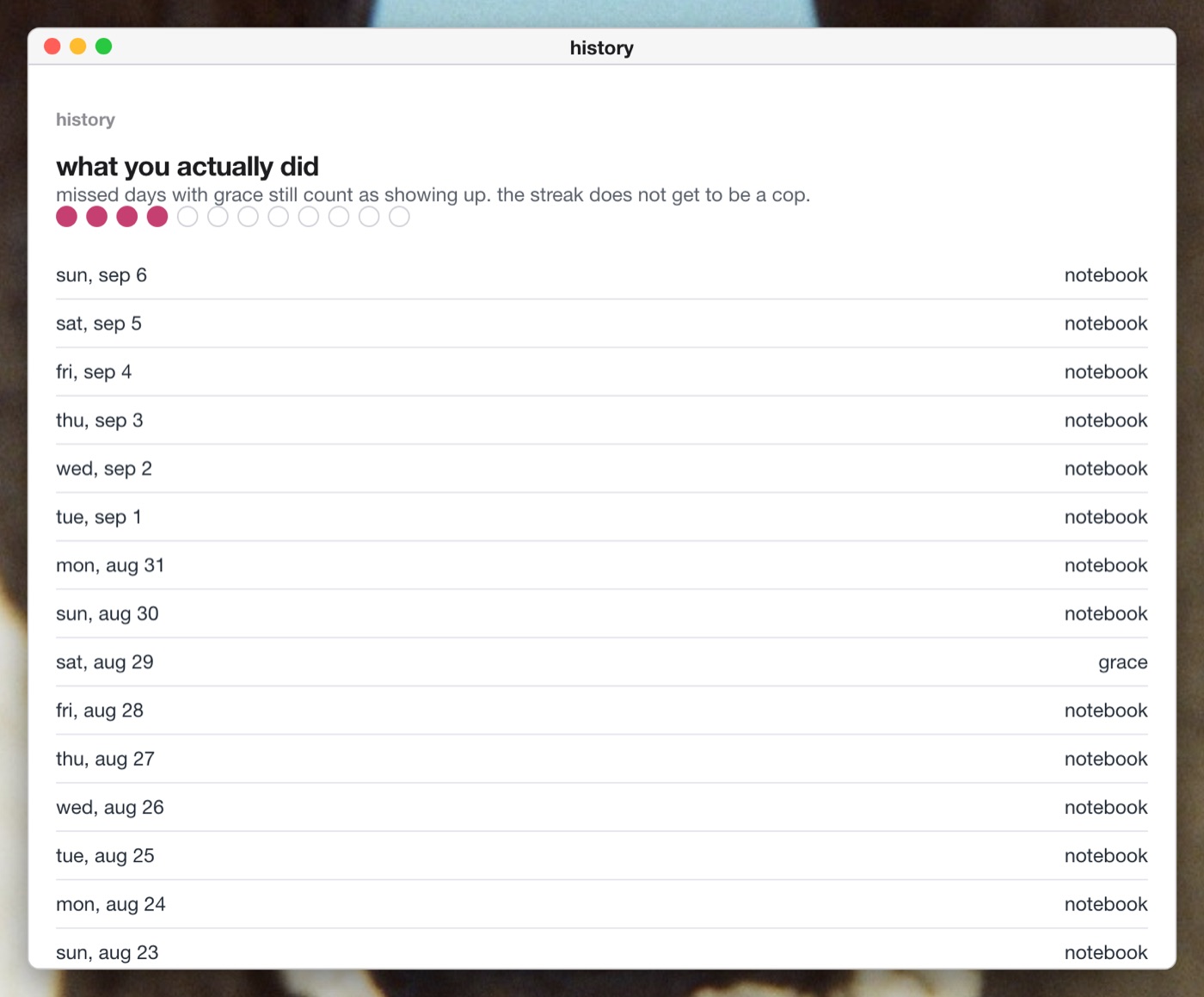
i replaced it with a grace ledger. you can log a missed day, choose a reason, and add a note. that day stays in your history alongside the days you wrote.
i logged two grace days during my early use, both on chronic illness days. naming why i needed the pause helped me think about what i needed to return to the practice.
keep the writing close
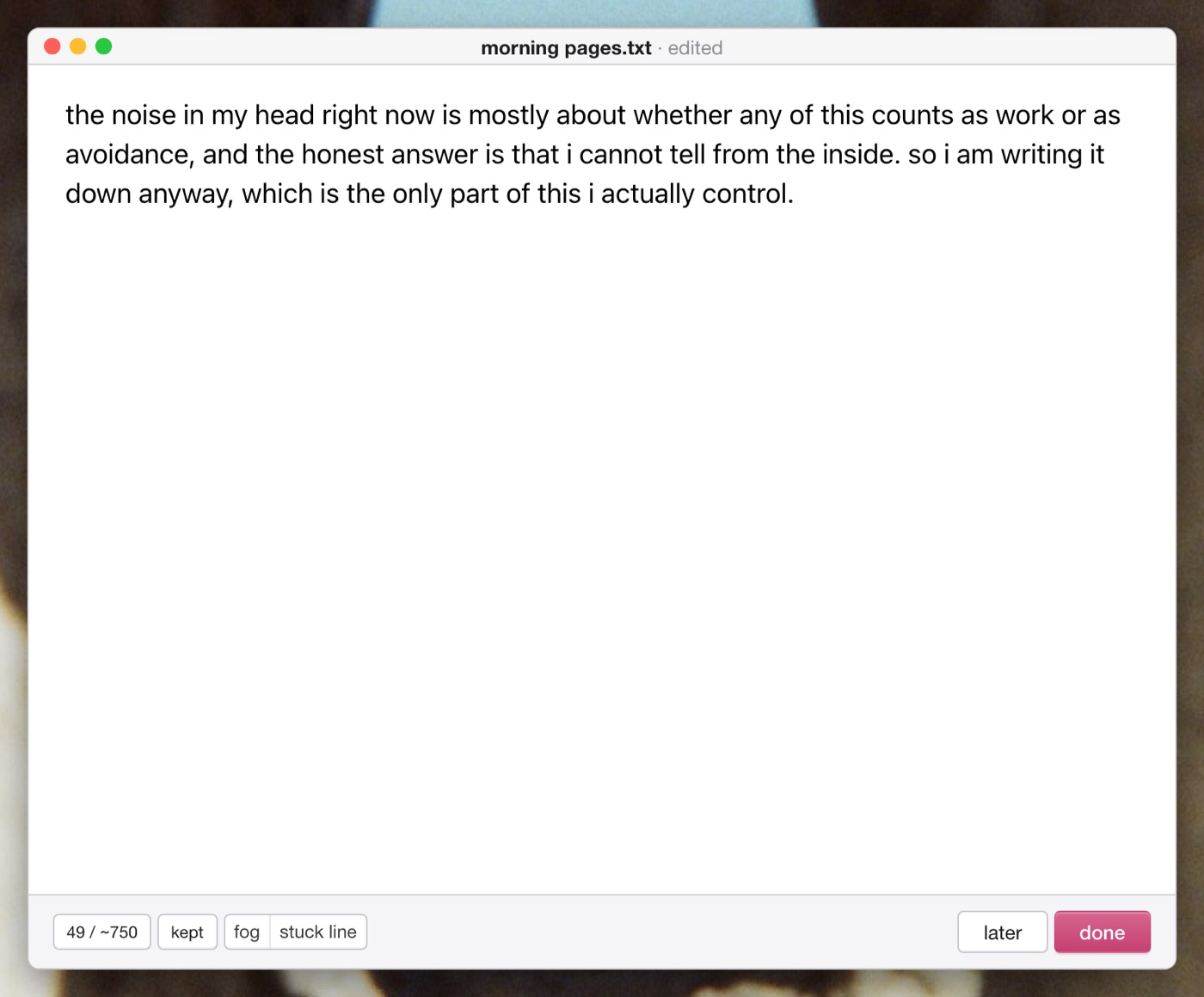
morning pages are unedited writing. mine are the most unguarded thing i write all day. that made privacy a product decision from the start.
the companion stores writing in the user’s browser, with no account or server storing their entries. it works offline and can be installed on a phone’s home screen.
the tradeoff is that the writing belongs to that browser on that device. clearing browser data can remove it. i put backup and restore in the file menu, using a readable JSON export so people can keep a separate copy.
fit the practice into my day
i already live in my calendar. i did not want another app with an opinion about my morning.
instead of push notifications, the companion exports the twelve-week schedule to a calendar. it includes daily pages and weekly artist dates, with check-ins and milestone markers.
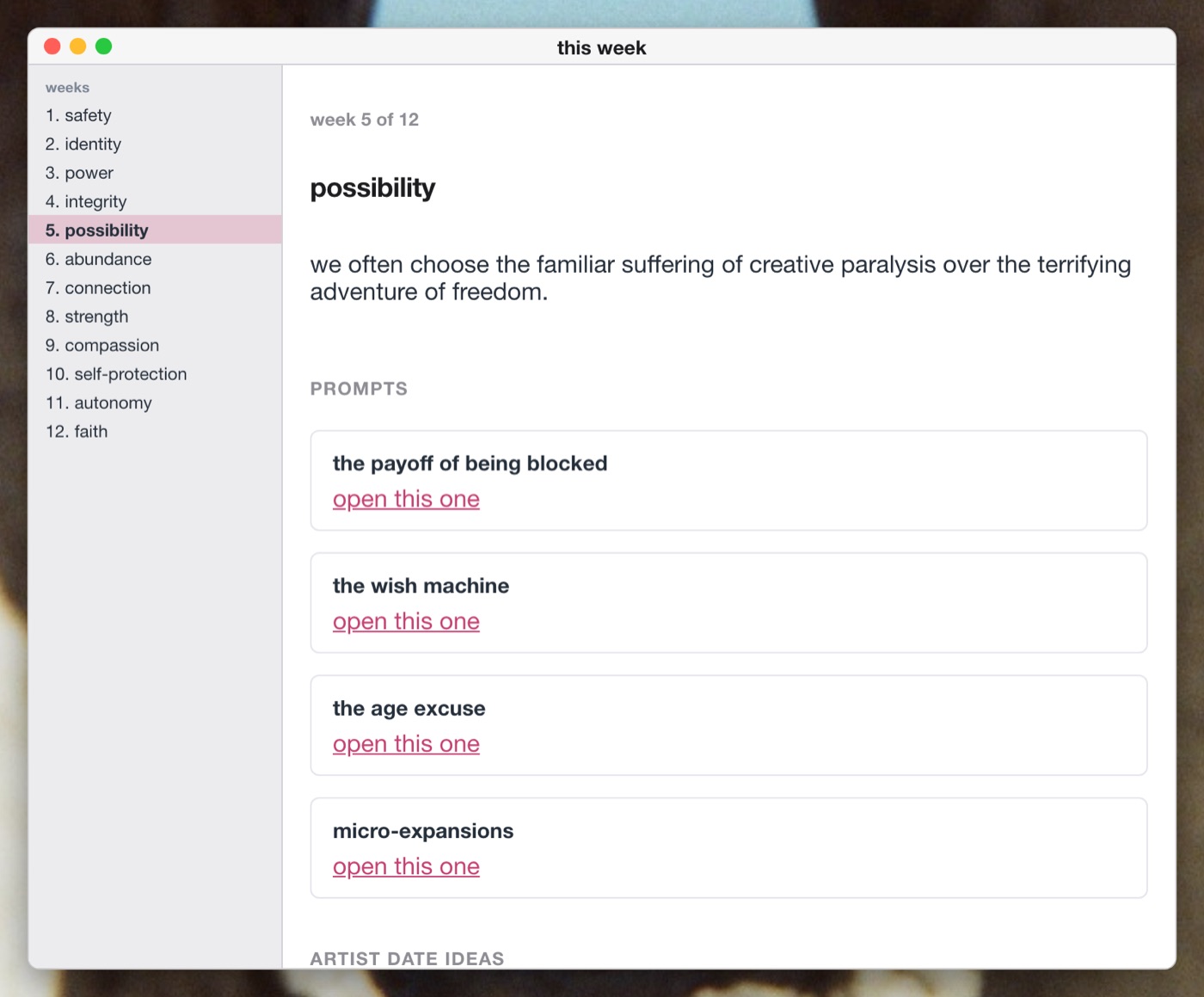
the desktop-inspired interface gives the practice a familiar place to live. windows organize the writing and weekly material; small details, like a sticky note reminding me to drink water, give it some personality. making it feel like mine was part of getting myself to use it.
what daily use exposed
after about four weeks, a friend asked which week the app said i was on. i discovered that the current week never advanced automatically. i had been using the app every day without noticing.
that prompted a wider review. i also found that navigating away before pressing “done” could lose a writing draft. protecting the writing needed the same attention as the tone of the experience.
| problem | change |
|---|---|
| the current week stayed fixed | derive it from the start date, with an option to stay in a week deliberately. |
| navigation could lose a draft | save drafts as you type and restore them when you return. |
| a blank start date could pin the app to week one | validate the date and repair affected saved state on load. |
| filing a page could recreate its draft | correct the draft-saving behavior after filing. |
i also reduced the offline payload from 1,080 KB to 527 KB and dependencies from 20 to 10 during that review. these are build measurements from the project, rather than measures of its effect on someone’s creative practice.
how i built it
i started with a Google AI Studio prototype, worked on the React code myself, and continued with Claude Code. i’m self-taught, so part of the process was asking for explanations, checking changes, and keeping notes as i learned.
i set the product direction, wrote the copy, and chose the visual approach. the grace ledger and calendar export came from what i wanted the experience to do. using the app over time gave me problems to investigate that i had missed while building it.
what came out of it
i released a working companion and used it daily through the first month. building it also gave me a finished creative project before i had made it very far into the program. i responded to being creatively blocked by building software. apparently that counts.
this case study reflects my own use and feedback from a friend. it does not establish whether the app helps other people sustain a creative practice.
artist dates remain the unresolved part for me. the app can suggest an outing and let me log it; i still skip them more often than i go. the next work is testing the date and save behavior more thoroughly, and making progress through the twelve weeks easier to understand.
have a small experience in mind?
i’m interested in digital keepsakes and standalone experiences built around something people care about.
talk about a project ↗︎